

Regenerative economics organizes production, investment, and exchange to strengthen the living systems and communities that make economic activity possible. For business leaders, public institutions, and community organizations, its central question is practical: does this decision leave people and places better able to thrive, or does it shift costs onto them?
Key takeaways
- Economic value includes financial viability, human wellbeing, and the condition of natural systems.
- Growth can be useful when it meets real needs, but growth alone does not prove that value has been created.
- Circular practices reduce waste; regenerative practices also consider whether social and ecological conditions improve.
- Organizations can start by tracing impacts through purchasing, work, resource use, and community relationships.
What makes an economy regenerative?
A regenerative economy treats healthy people, communities, and ecosystems as the foundation of lasting prosperity, not as inputs to consume or costs to ignore. It directs decisions toward restoring that foundation while meeting human needs and maintaining financial viability.
This is a systems view of value. A company may earn a profit while degrading the soil it depends on, exhausting workers, or weakening its local supply network. Those costs do not disappear because they sit outside the company’s accounts. A more complete assessment asks what the organization contributes to the conditions that support life and work.
Living systems ideas can help leaders consider relationships, feedback, and the character of a particular place. The living systems approach to economic design offers one way to explore how economic patterns can support renewal rather than depletion. The aim is not to copy nature superficially, but to make decisions with greater awareness of interdependence.
This approach does not mean rejecting all growth. More affordable housing, dignified employment, or access to essential services may require expansion. The test is whether that expansion meets genuine needs without undermining the human and ecological conditions it relies on. For a related discussion, see how businesses can operate beyond growth-first assumptions.
How is regeneration different from circularity?
Circularity keeps products and materials in use for longer, while regeneration asks whether the whole system becomes healthier. Repair, reuse, and recycling can reduce waste, but they do not automatically guarantee fair work, cleaner local environments, or stronger communities.
| Approach | Main question | What to examine |
|---|---|---|
| Growth-first | Did output or revenue increase? | Financial results, with wider effects often assessed separately |
| Circular | Did materials stay in use and avoid waste? | Product life, reuse, repair, and material flows |
| Regenerative | Did the system’s capacity to support life improve? | Ecological condition, human wellbeing, fairness, and resilience |
The approaches can reinforce each other. A manufacturer that designs products for repair may reduce material demand. If it also provides safe work, pays suppliers fairly, and uses energy responsibly, its circular practices contribute to broader renewal. Leaders can compare these choices with ethical principles for business decisions rather than treating efficiency as the only goal.
Which practices can help create regenerative value?
Organizations can begin with decisions they already control, especially purchasing, employment, resource use, and investment. These choices connect an organization’s everyday operations to the livelihoods and environments around it.
- Buy with place in mind. Consider supplier labor conditions, local needs, durability, and the environmental effects of production.
- Design out avoidable waste. Prioritize maintenance, repair, reuse, and material recovery where they make sense.
- Share value fairly. Examine wages, contract terms, access to opportunity, and who carries risk.
- Strengthen relationships. Involve workers, suppliers, and residents who experience the effects of a decision.
- Match solutions to context. A practice that benefits one place may not suit another, so assess local conditions and consequences.
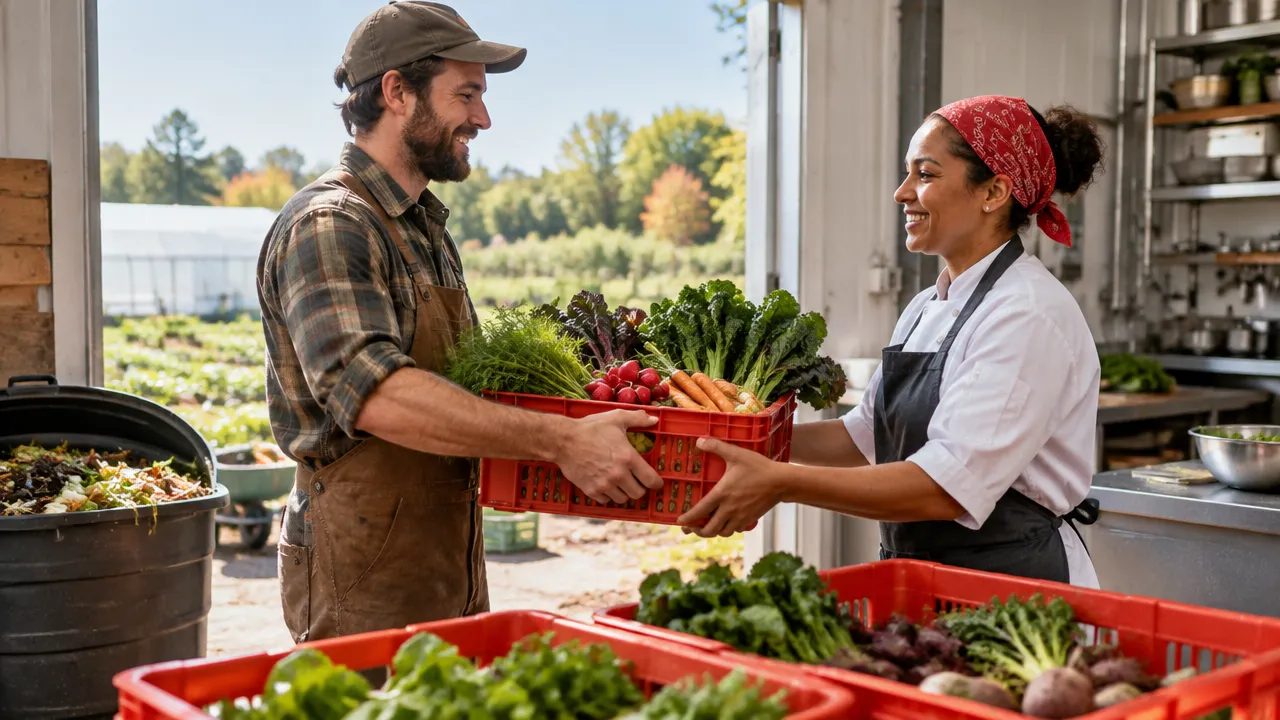
For example, a school or hospital could review food purchasing, choose suppliers with responsible labor practices, plan menus around available seasonal ingredients, and separate food scraps for useful recovery. The point is not to claim that one procurement change solves every problem. It is to make a visible connection between spending, working conditions, waste, and community benefit. Thoughtful procurement that considers local community impact can help make that connection concrete.
How can organizations measure value beyond growth?
Use a small set of indicators that show both whether the organization is viable and what its activities do to people and places. Measurement is most useful when it informs decisions, not when it becomes a new reporting ritual.
A balanced dashboard could include financial health, workforce experience, supplier conditions, material use, waste, and a locally relevant environmental measure. A business might track staff retention and energy use; a community program could assess access, participant experience, and whether benefits reach underserved residents.
Choose measures that connect to actual impacts, establish a baseline, and review progress consistently. Include people affected by the work when deciding what success means. A single positive indicator can conceal a tradeoff, such as reducing waste while increasing pressure on workers. Comparing human impact measures with conventional performance indicators can help reveal what standard financial reporting leaves out.
Measures should be interpreted with care. A number does not explain why a result changed, who benefited, or whether an improvement will last. Pair indicators with feedback from workers, suppliers, and communities, and be transparent about limitations. The practice of measuring human impact beyond profit can help organizations make those questions part of routine review.
How can a business begin the transition?
Start with one decision that has meaningful consequences and enough influence behind it to change. A focused pilot can reveal barriers and tradeoffs before an organization expands the approach.
- Map dependencies. Identify the people, places, materials, and relationships the activity relies on.
- Listen to affected groups. Ask workers, suppliers, and community members what is helping or causing harm.
- Set a practical goal. Define an improvement in human or ecological conditions alongside a financial requirement.
- Test a change. Adjust a purchasing rule, product design, work practice, or investment decision.
- Review and adapt. Compare results with the baseline, discuss unintended effects, and revise the approach.
Progress depends on consistent practice, not a perfect plan. The Capital Institute’s introduction to regenerative economics presents the topic through a living systems lens, while each organization still needs to translate broad ideas into its own responsibilities and context.
The deeper shift is to treat human and ecological consequences as part of value creation itself. When organizations preserve what matters, repair what they can, and distribute benefits more responsibly, economic activity becomes more capable of supporting a thriving future.
Frequently asked questions
What does regenerative economics mean?
Regenerative economics is an approach to organizing economic activity so it renews, rather than depletes, the social and ecological conditions on which communities depend. It asks whether value is created for people and places over time, not only whether financial output increases.
What are examples of regenerative economics in practice?
Examples include a business buying from local suppliers that provide fair working conditions, a city returning food scraps to farms as compost, or a lender directing capital toward community needs and ecosystem repair. Each example connects economic activity to a measurable improvement in the place and people it affects.
How is a regenerative economy different from a circular economy?
A circular economy focuses on keeping materials and products in use, reducing waste through repair, reuse, and recycling. A regenerative economy includes those practices but also asks whether the wider system improves soil, health, livelihoods, and community resilience. Circular flows can support regeneration, but they do not guarantee it.
What are the disadvantages of circular economy practices?
Circular practices can require investment, new infrastructure, and coordination across suppliers, and recycling alone may not prevent high resource use. A regenerative approach also needs to check who benefits, who bears the costs, and whether ecological or social conditions actually improve. The right solution depends on local needs and impacts.
How can an organization measure regenerative impact?
Organizations can track financial health alongside indicators such as wages, worker retention, supplier conditions, resource use, waste, and local environmental quality. Select measures that match the organization’s impact, set a baseline, and review changes over time. A balanced scorecard helps reveal tradeoffs hidden by revenue or output alone.