
Most people do not lose their way at work because they lack skill. We often lose our way because our days get fragmented. Meetings pull us in one direction. Targets pull us in another. Emotions stay hidden until they shape every decision.
That is where the five sciences can help. We see them as five lenses for daily work: human development, conscious leadership, systems thinking, practical spirituality, and ethical economics. Each one helps us notice what we usually miss. Together, they help us work with more clarity, steadiness, and human care.
The five sciences turn daily workflow into a practice of awareness, not just task completion.
We have seen this in ordinary routines. A team starts the week tense. Deadlines are tight. One person feels unheard. Another is near burnout. Nothing looks dramatic from the outside, yet the atmosphere is already shaping results. Small inner states become shared outcomes.
Work reflects consciousness.
Start with human development
Human development in workflow means we do not treat people as role labels only. We pay attention to maturity, self-observation, and the way people respond under pressure. A process may look good on paper and still fail because the people inside it are reacting from fear, ego, or exhaustion.
In our view, this science begins with simple habits:
Pause before the first major task and name your mental state.
Notice what triggers defensiveness during feedback.
Track recurring patterns, not isolated mistakes.
End the day by asking what your work caused in others.
These acts are small, but they change the tone of a day. We stop running only on impulse. We begin to see ourselves while we work.
Self-awareness is not separate from workflow. It shapes the quality of every choice inside it.
This also improves leadership potential. A meta-analysis of more than 27,000 leaders found a moderate positive link between emotional intelligence and leadership effectiveness. That matters in daily work because leadership is not limited to job titles. We lead in meetings, handoffs, conflict, and silence.
Practice conscious leadership in small moments
Conscious leadership is not a speech style. It is how we hold power, attention, and impact. We apply it in moments that seem ordinary. A manager answers a tense message. A colleague gives credit in public. Someone notices who has gone quiet in the meeting.
We can bring this science into workflow through a short sequence:
Read the situation before reacting.
Name the real issue, not just the visible symptom.
Respond in a way that protects both clarity and dignity.
Review the human effect after the action.
One morning, a team lead saw two analysts disagree over a report. The old habit would have been speed: decide, assign, move on. Instead, the lead asked each one what they were protecting. One was protecting accuracy. The other was protecting the deadline. The conflict changed shape at once. It was no longer personal. It became readable.
Research also supports a more grounded view of emotional skill. A study on leadership performance in business education found that ability-tested emotional intelligence predicted leadership grades, while self-reported emotional intelligence did not. We take that as a useful warning. It is not enough to say we are self-aware. We must show it in practice.

Use systems thinking to see what is connected
Many workflow problems repeat because we treat them as isolated events. Systems thinking asks us to look for loops, delays, dependencies, and side effects. Instead of asking, “Who caused this?” we ask, “What pattern keeps producing this?”
We can use this science in weekly reviews. When a problem returns, map it. Look at inputs, bottlenecks, emotional pressure points, and hidden incentives. The answer is often wider than the visible failure.
In our experience, three questions help:
What happened before this problem appeared?
Who is adapting in silence to keep the system working?
What result are we rewarding without noticing?
A randomized controlled trial on systems thinking and simulation showed stronger understanding of sustainability problems and better transfer to similar problems. We see a clear lesson here. When people learn to read structure, they make better choices across contexts, not only in one case.
Systems thinking helps us stop fixing symptoms and start seeing causes.
Bring practical spirituality into the day
Practical spirituality at work does not mean adopting a ritual or belief system. It means working with presence, meaning, coherence, and respect for inner life. It is the science that asks whether our actions match our values when no one is watching.
This matters because many people are not just tired. They are disconnected. The 2024 to 2025 workplace mental health poll found that 52% of employees felt burned out in the past year due to their job, and 37% felt so overwhelmed that it was hard to do their job.
When we read numbers like these, we should not respond with surface fixes only. We need forms of work that protect meaning and mental steadiness. Practical spirituality can enter workflow through grounded actions:
Begin meetings with one minute of silence or centering.
Set a daily intention for the quality of your presence.
Review whether your pace is harming judgment.
Create space for honest check-ins without forcing exposure.
A study on workplace spirituality, well-being, and performance found direct gains in both well-being and performance, with well-being strongly linked to individual output. We read this very simply: when inner life is respected, work becomes more stable.
Presence changes pace.
Apply ethical economics to everyday choices
Ethical economics in workflow means we do not measure value by volume alone. We ask what our decisions preserve, improve, or damage. We count the human cost, not just the visible gain.
This science becomes real in resource allocation, feedback systems, hiring, deadlines, and success metrics. If a team hits targets while trust collapses, that is not a sound result. It is deferred damage.
We can apply ethical economics by reviewing:
Whether timelines are realistic for human limits.
Whether rewards favor healthy behavior or silent strain.
Whether short-term wins create long-term erosion.
Human morale is part of value. A study on emotional and social intelligence in academic leadership found strong links with job satisfaction. When people feel seen, respected, and socially safe, the whole work climate changes.
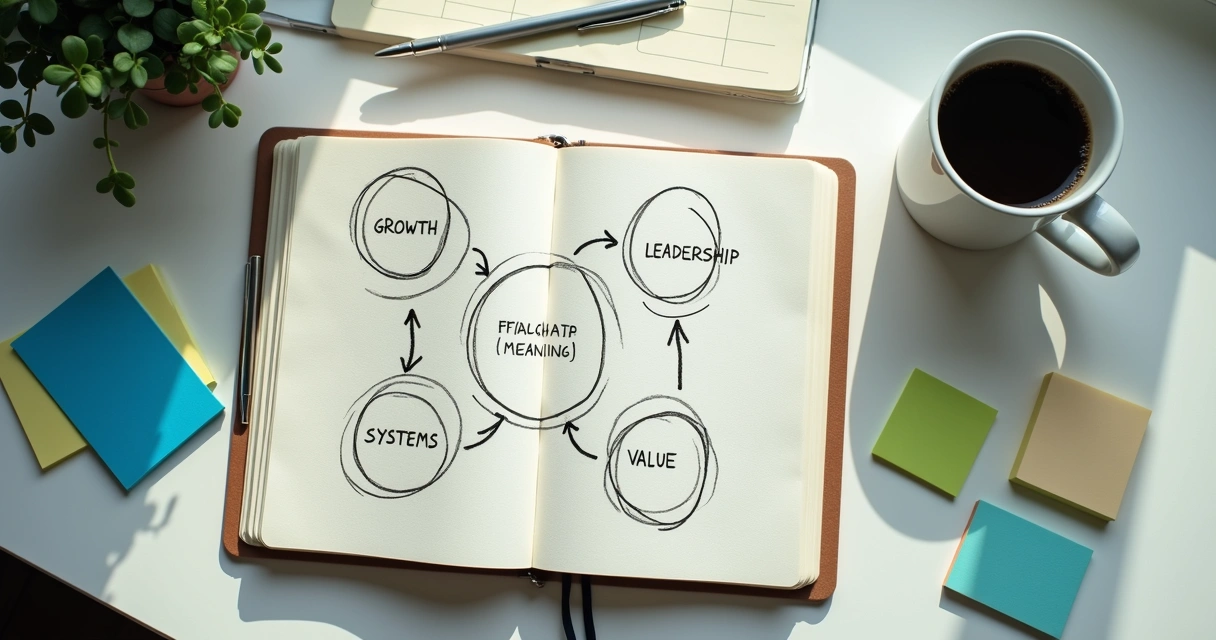
How the five sciences work together
These five sciences are not separate boxes. Human development helps us notice ourselves. Conscious leadership shapes response. Systems thinking shows the wider pattern. Practical spirituality restores meaning and presence. Ethical economics keeps value tied to human effect.
When used together, they reshape workflow from the inside. A task list stays a task list, yes. But the consciousness behind it changes.
We think that is the deeper shift many teams are looking for. Not more noise. Not more control. Better seeing.
Conclusion
Applying the five sciences in daily workflow does not require a grand redesign. We begin with attention. We observe our state, our impact, our systems, our meaning, and our measures of value. Then we repeat. Over time, the workday becomes less reactive and more intentional.
Better workflow begins when we treat human impact as part of the work itself.
Frequently asked questions
What are the five sciences?
The five sciences are human development, conscious leadership, systems thinking, practical spirituality, and ethical economics. Together, they offer a way to guide daily work with more awareness, stronger judgment, and better human outcomes.
How to use five sciences daily?
We can use them through small habits. Start the day with self-observation, lead with emotional clarity, review recurring patterns in workflows, bring moments of presence into meetings, and assess whether decisions create value without harming people.
Are the five sciences really effective?
Yes, when they are practiced with consistency. Research on emotional intelligence, systems thinking, workplace spirituality, and social awareness shows measurable gains in leadership, learning transfer, well-being, and job satisfaction. Their effect grows when they are applied in real work situations, not only discussed in theory.
How can five sciences improve productivity?
They can improve productivity by reducing avoidable conflict, burnout, confusion, and rework. When people understand themselves, read systems better, and make fairer decisions, work flows with fewer hidden costs. The result is not just more output, but cleaner and more sustainable output.
Where can I learn more about them?
We suggest learning through practice first. Keep a daily reflection record, map one recurring team problem, and review one decision each week through the five lenses. Over time, direct observation becomes one of the best teachers.