
Restorative justice responds to harm by involving affected people in a structured effort to understand its impact, take responsibility, and decide what repair is possible. For community leaders, educators, and organizations, its value lies not in replacing every consequence, but in making accountability more human, specific, and connected to future safety.
Key takeaways for building repair, not just compliance
- Repair starts with the needs of people affected, not with a preselected apology or penalty.
- Participation should be informed and voluntary, with safety assessed before any dialogue.
- Accountability means acknowledging impact and taking concrete steps, not merely expressing regret.
- Community repair requires follow-through, support, and attention to the conditions that allowed harm.
Restorative justice treats harm as a human and community issue
This approach asks who was affected, what they need, and who has a responsibility to help address the consequences. That is different from a process focused mainly on which rule was broken and what penalty follows. The two approaches can coexist: restorative processes do not automatically replace legal duties, formal discipline, or protective measures.
The central idea is that harm reaches beyond an incident. A conflict at school, for example, may leave one student feeling unsafe, weaken trust among classmates, and strain families and staff. A community repair process makes those effects visible and helps participants consider what would improve safety and restore trust. The University of Wisconsin Law School's restorative justice resources describe the approach as a set of principles and practices for responding to harm and its effects.
This human-centered lens also connects to systemic approaches to conflict resolution: repairing a single relationship matters, but so does examining the patterns and conditions surrounding the harm.
Five practical principles help communities make repair real
There is no single five-principle list that every program follows. As a practical guide, communities can look for five elements: repair, voluntary participation, accountability, inclusion, and safety with reintegration. Together, they help distinguish a meaningful process from a conversation arranged only to satisfy an institution.
- Repair: Identify emotional, material, relational, or community impacts and address what can be changed.
- Choice: Make sure participants understand the process and can decline or pause without coercion.
- Accountability: Ask the person who caused harm to acknowledge its effects and take realistic responsibility.
- Inclusion: Give affected people and appropriate support networks a voice, without making anyone speak for an entire community.
- Safety and reintegration: Prevent further harm while supporting responsible return to community life where appropriate.
These principles can guide a school circle, community conference, or facilitated conversation. They are not a shortcut for assessing risk or a reason to pressure someone harmed to forgive. Strong emotional safety practices help create conditions for honest participation.
A safe process begins before anyone sits in a circle
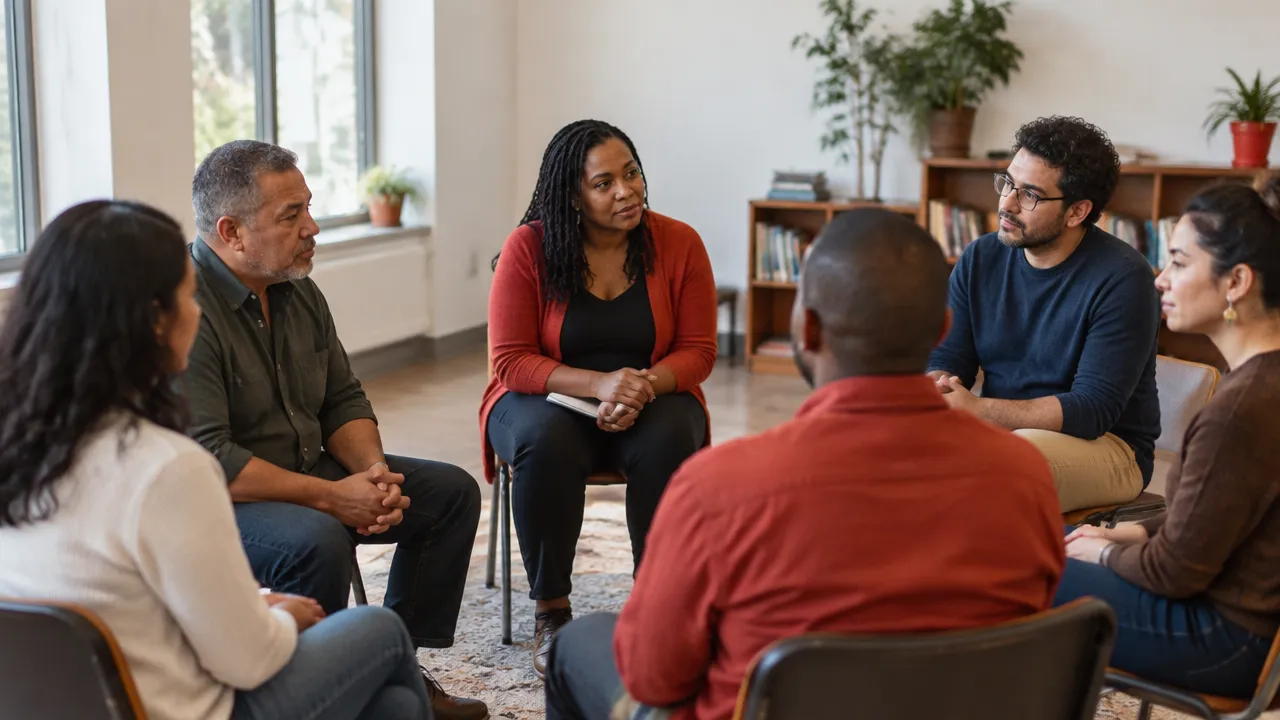
Preparation determines whether a restorative meeting is appropriate. A trained facilitator should speak with participants separately, explain options and limits, identify support needs, and check for intimidation, retaliation, or unequal power. No one should be pushed into a face-to-face conversation to prove they are cooperative.
When a meeting is appropriate, participants can describe what happened, how they were affected, and what they need now. The facilitator helps them listen without turning the conversation into an interrogation or a contest over who deserves sympathy. Some processes use indirect communication, such as a carefully facilitated letter, when meeting in person is not wanted or safe.

An agreement might include replacing damaged property, correcting harmful misinformation, respecting boundaries, or arranging support to prevent recurrence. Any commitments should be specific, achievable, and checked later. Justice Canada's restorative justice overview provides additional context on restorative approaches and the importance of addressing the impact of harm.
Community repair means changing conditions as well as behavior
A repaired relationship is not the same as a repaired system. If a school responds to repeated bullying with a circle but leaves supervision gaps and reporting barriers untouched, the process may address one incident while preserving the conditions that enabled it.
Communities can pair individual agreements with practical changes: clearer reporting routes, consistent follow-up, staff training, accessible support, or a review of policies applied unevenly. This is where restorative work meets ethical conflict practices and the responsibility to examine how decisions affect people beyond the immediate participants.
Useful measures include whether participants felt heard and safe, whether agreed actions were completed, whether people could access support, and whether similar harm happened again. A high meeting count alone is not proof of success. Human outcomes and system changes matter more than activity totals.
Limits and safeguards determine when the approach is appropriate
Restorative justice is not suitable in every situation. It can fail when a harmed person is pressured to participate, a responsible person avoids acknowledging impact, or facilitators cannot manage serious power differences. A process may also be inadequate when immediate protection, formal investigation, or other legal obligations must take priority.
That does not mean entire categories of cases should be casually declared eligible or ineligible. Suitability depends on informed choice, safety planning, trained facilitation, and the needs of those affected. The process should never imply that forgiveness is required, that harm was mutual when it was not, or that a conversation erases accountability.
Communities build trust when they use restorative practices as one accountable option, not as a universal solution. Repair becomes stronger when people can name the harm, choose how to engage, see concrete follow-through, and help change the conditions that caused damage.
Frequently asked questions
What is restorative justice in simple terms?
Restorative justice is an approach to responding to harm that brings affected people into a safe, voluntary process to identify what happened, who was affected, and what could help repair the damage. It focuses on meaningful accountability and future safety, not simply on punishment or on forcing people to reconcile.
What are the five basic principles of restorative justice?
There is no single official list used everywhere, but five practical principles are repairing harm, voluntary participation, meaningful accountability, inclusion of affected voices, and attention to safety and reintegration. These principles guide decisions; they do not guarantee that a meeting is appropriate or that the people involved will reach agreement.
What are the five R's of restorative justice?
The five Rs are not a universal standard, and different programs use different versions. One practical set is relationship, respect, responsibility, repair, and reintegration. Treat it as a memory aid, not a formal legal test: a sound process still needs informed consent, skilled facilitation, safety planning, and a realistic way to address the harm.
Does restorative justice work?
It can help when people participate freely, facilitators are trained, and agreements address real needs rather than appearance. It is not a guaranteed remedy, and success should not be measured only by whether a meeting occurs. Safety, participant experience, follow-through, and whether harm recurs all matter.
Which offenses may not be suitable for restorative justice?
A case may be unsuitable when someone cannot participate safely or freely, the responsible person denies the harm and refuses accountability, or facilitators cannot manage a serious power imbalance. The nature of an offense alone does not determine suitability. A trained program must assess the people, risks, safeguards, and applicable legal requirements.
What are the disadvantages of restorative justice?
Common concerns include pressure on harmed people to forgive, unequal power between participants, inconsistent facilitation, and agreements that are not completed. A process can cause further harm if safety and choice are treated as formalities. Independent screening, support people, preparation, and follow-up help reduce these risks, but cannot eliminate every limitation.