


Stakeholder capitalism asks companies to consider the people and systems affected by business decisions, not only returns to investors. It can support durable value, but only when leaders explain trade-offs, measure human consequences, and accept responsibility for outcomes. This guide clarifies how the model works, who may benefit, and where its promises can fall short.
Key takeaways for business leaders
- Stakeholders include employees, customers, suppliers, communities, the environment, and shareholders.
- Considering stakeholders does not remove the need for profit; it broadens how leaders assess risk and value.
- There is no universal priority list. Decision-makers should focus on who is affected and how seriously.
- Credible practice connects consultation to budgets, incentives, governance, and remedies.
- Without transparent goals and accountability, stakeholder language can become a reputational exercise.
What does stakeholder capitalism mean?
Stakeholder capitalism is a business approach that considers a company’s responsibilities to the groups affected by its decisions, while still pursuing financial sustainability. It differs from treating shareholder returns as the only meaningful measure of corporate success.
The term describes an approach to governance, not a single legal structure or universally agreed rulebook. The Business Roundtable’s 2019 purpose statement, for example, described commitments to customers, employees, suppliers, communities, and shareholders. A public commitment, however, does not prove that a company has changed its practices.
For a human-impact lens, the central question is not simply whether a company creates value, but how it creates it and who bears the cost. That distinction connects with aligning profit with social responsibility.
How does it differ from shareholder primacy?
Shareholder primacy centers investor interests in corporate decision-making. A stakeholder approach asks leaders to consider a wider set of effects. In practice, the difference depends on which interests shape decisions when they conflict.
| Question | Shareholder-centered approach | Stakeholder approach |
|---|---|---|
| Whose interests are considered? | Primarily shareholders and financial returns | Investors and other affected groups |
| How is success assessed? | Often through financial performance | Through financial results and wider effects on people and systems |
| What happens in a conflict? | Investor outcomes tend to guide the decision | Leaders explain the trade-off and consider who faces harm |
This comparison is a practical distinction, not a claim that every company or jurisdiction follows one identical model. Shareholders may have specific formal rights, while employees, suppliers, and communities can be affected through contracts, working conditions, purchasing choices, and local impacts. Ethical conflicts in business decisions become visible when leaders have to explain which interest takes priority and why.
Who benefits, and when?
Employees, customers, suppliers, communities, and investors may all benefit when a company reduces harm and builds durable relationships. Benefits are not automatic or evenly shared; they depend on the decision, the people affected, and whether commitments are followed through.
- Employees may benefit from safer conditions, fairer treatment, and a voice in decisions that affect their work.
- Customers may benefit from reliable products, honest information, and responsible service.
- Suppliers may benefit from fairer purchasing practices and more stable business relationships.
- Communities and the environment may benefit when companies prevent or address harmful local and ecological effects.
- Investors may benefit from a clearer view of operational, reputational, and relationship risks, though positive outcomes are not guaranteed.
The OECD Guidelines for Multinational Enterprises provide recommendations for responsible business conduct, including due diligence to identify and address adverse impacts. This puts emphasis on the consequences of operations and business relationships, not only on stated intentions.
How can a company put the model into practice?
Stakeholder engagement matters only when it can influence a decision. A useful process links listening to impact assessment, clear choices, assigned responsibility, and follow-up.
- Identify affected groups. Include people who may experience the effects, not only those with the most influence over the company.
- Listen before deciding. Use accessible ways for workers, customers, suppliers, and community members to share concerns.
- Assess the impact. Consider the likelihood, severity, and distribution of potential benefits and harms.
- Explain trade-offs. State which interests conflict, whose needs guide the choice, and why.
- Set measurable commitments. Define what will change, by when, and how progress will be assessed.
- Assign accountability. Give named leaders and governance bodies responsibility for delivery.
- Review and remedy. Share results, learn from affected people, and address harms when they occur.
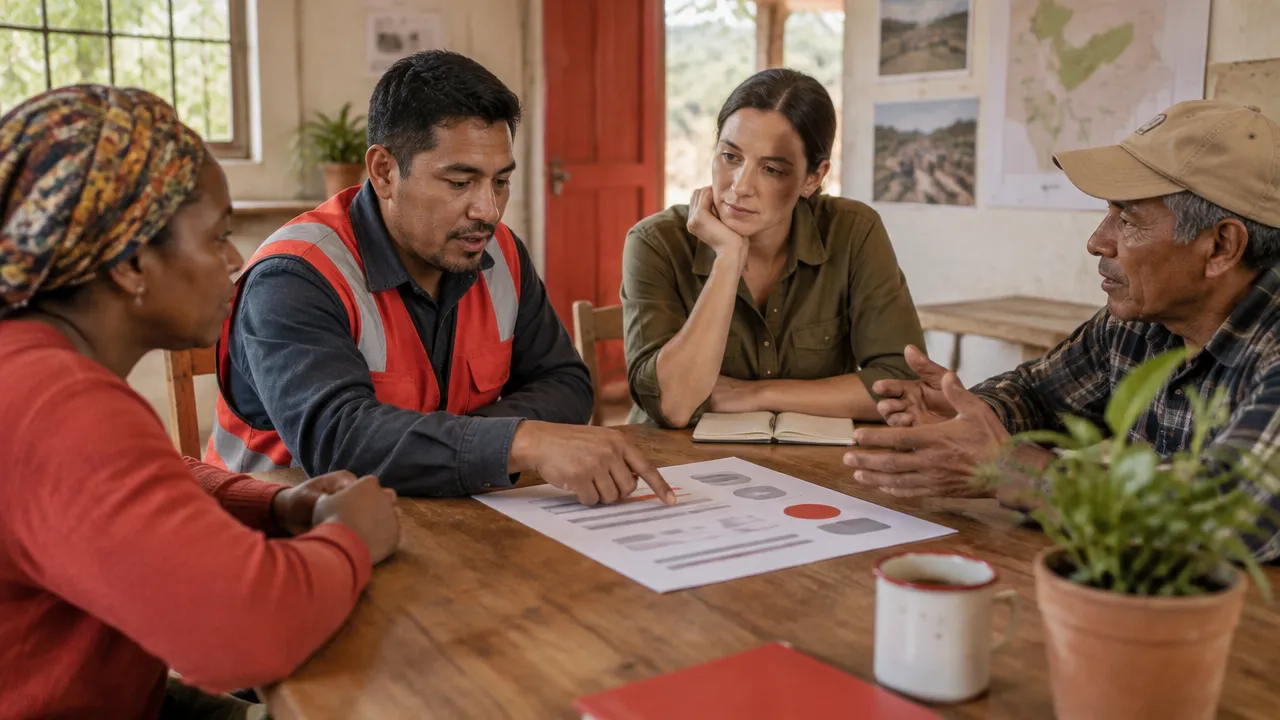
For example, when a retailer considers lowering supplier prices, leaders can examine whether the change could put wages, working hours, or safety at risk. They should document the evidence, consult affected suppliers and workers where feasible, and explain safeguards. Ethical procurement practices help make supply-chain effects part of the decision rather than an afterthought.
What are the main risks and criticisms?
The central criticism is that stakeholder language can be difficult to enforce when leaders do not define priorities or report results. If a company claims to serve everyone, it may avoid explaining who gained, who lost, and what it will do about the consequences.
Other risks include token consultation, goals that cannot be measured, and incentives that reward short-term financial outcomes while public commitments promise broader responsibility. These gaps make it hard for workers, customers, investors, and communities to judge whether the approach has changed business behavior. A test for tokenistic social impact can help distinguish visible gestures from changes in practice.
A stronger approach does not promise that every stakeholder will always benefit. It makes decision criteria clear, reports both progress and setbacks, and provides ways to raise concerns or seek remedy. Companies can also track human-impact measures alongside traditional KPIs, rather than treating financial results as the full account of value.
Frequently asked questions
What is stakeholder capitalism?
Stakeholder capitalism is a way of governing a business that considers how decisions affect employees, customers, suppliers, communities, the environment, and investors. It does not mean ignoring profit. It asks leaders to pursue durable business success while taking responsibility for the people and systems affected by how the company operates.
What is the difference between a stakeholder and a shareholder?
Shareholders own shares and may have formal voting or financial rights. Stakeholders are the broader groups affected by a company, including workers, customers, suppliers, and communities. A person can be both, such as an employee who also owns company stock, but the terms describe different relationships to the business.
Who is more important, shareholders or stakeholders?
There is no universal ranking of stakeholders that fits every decision. The most important groups depend on who may be significantly affected, the severity and likelihood of that impact, and the company’s responsibilities. Investors matter, but their interests do not automatically outweigh workers, customers, suppliers, or communities facing serious harm.
How does stakeholder capitalism work in practice?
It works when leaders bring stakeholder concerns into real decisions, set measurable commitments, disclose trade-offs, and assign responsibility for results. For example, a company considering a supplier price reduction should examine whether it would undermine wages or safety, not assess the saving alone. Consultation without changes to decisions is not meaningful practice.
What are the main criticisms of stakeholder capitalism?
Its main risks are vague promises, conflicting priorities, and weak accountability. If leaders can claim to serve everyone without explaining whose interests prevailed or why, the approach may become public relations rather than governance. Clear measures, transparent reasoning, board oversight, and remedies for harm help distinguish real commitments from cosmetic ones.