
A circular economy is a business model that reduces waste by keeping products and materials useful for longer. For business leaders, it can strengthen resilience and reduce resource dependence, but only when the system also protects workers, customers, and communities. The practical test is not whether a company recycles more, but whether it creates value with fewer new resources and better human outcomes.
Key takeaways for business leaders
- Design out waste before production, rather than relying on disposal solutions later.
- Keep products at their highest practical value through maintenance, repair, reuse, and refurbishment.
- Build a business case around durable customer value, reliable supply, and responsible work.
- Measure resource performance alongside worker, customer, and community impact.
A circular business keeps value in use, not just materials out of landfills
A circular economy replaces the familiar pattern of extracting resources, making goods, and throwing them away with systems that prevent waste and extend usefulness. It treats products, components, and materials as assets that can serve multiple users or purposes over time.
This approach includes two broad material pathways. Metals, plastics, and electronics can circulate through repair, reuse, and recovery. Food and other biological materials can return safely to natural systems when managed appropriately. The circular design principles emphasize preventing waste, circulating products and materials, and regenerating nature. The EPA circular economy guidance also describes strategies for keeping resources in use and reducing waste.
For a company, this is not simply an environmental initiative. It changes product design, sourcing, customer relationships, logistics, and revenue. A useful starting point is to examine how an organization can make a product last longer while making its next use convenient and worthwhile.
Linear and circular models create different business responsibilities
The key difference is what happens after a product is sold. A linear model usually ends with the customer, while a circular model plans for maintenance, return, reuse, or recovery from the beginning.
| Business choice | Linear approach | Circular approach |
|---|---|---|
| Product design | Prioritizes low-cost production and replacement | Supports durability, repair, and disassembly |
| Customer relationship | Often ends at the sale | Can continue through service, resale, or take-back |
| Material flow | New inputs become waste after use | Products and materials return to useful cycles |
| Value creation | Depends heavily on selling more new units | Can include maintenance, reuse, and recovered materials |
These are tendencies, not guarantees. A take-back program, for example, does not make a business circular if returned items are discarded or if collection creates more cost and pollution than it prevents. Responsible design must account for the full journey, including transport, processing, and the conditions of the people doing the work.
Repair, reuse, and resale can turn circularity into daily operations
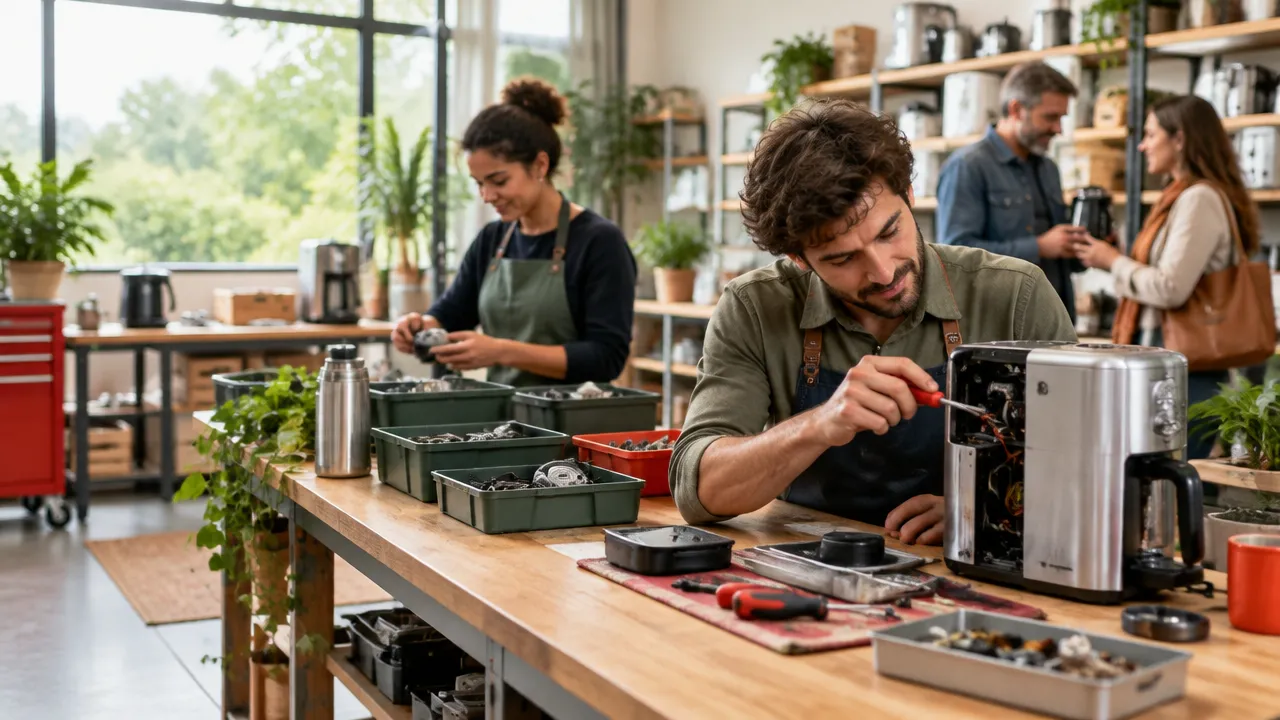
Businesses can put circular principles into practice by changing the product, the service, or the flow of materials. A furniture maker might offer replaceable parts and collect used pieces for refurbishment. An electronics retailer might assess returned devices, repair suitable units, and resell them with clear condition information.
- Design for longer life: Choose durable components and make common repairs feasible.
- Offer ongoing service: Use maintenance, leasing, or product-as-a-service arrangements where they suit customer needs.
- Create return pathways: Make collection, inspection, and redistribution easy for customers and staff.
- Use recovered inputs responsibly: Set quality and traceability standards for reused parts and materials.
These strategies require coordination across design, procurement, sales, operations, and customer support. Connecting them to more conscious supply chains can help teams consider conditions and consequences beyond the company boundary.

Environmental gains count only when people benefit too
A circular system can reduce demand for new resources, but it is not automatically fair or sustainable. Repair and sorting work needs safe conditions, appropriate training, and fair compensation. Take-back programs should also be accessible to customers rather than shifting the effort and cost onto people least able to manage it.
Leaders can treat human impact as part of the business model, not a separate charitable concern. Ask who gains reliable access to affordable products, who performs the repair and recovery work, and whether communities face added pollution or transport burdens. This perspective aligns resource efficiency with human-centered value.
Use a balanced set of indicators, such as product lifespan, repair rates, the share of sales from reused or refurbished goods, material recovery, and waste per unit. Pair these with worker safety, job quality, and customer access measures. Human impact measures can help leaders see whether operational gains are improving outcomes for people as well as materials.
Start with one product flow and prove the full value
A practical transition begins with a specific product or material stream, not a sweeping promise. Choose an area with a clear waste problem, customer need, or supply risk, then test whether a better loop is workable and beneficial.
- Map the product lifecycle, from sourcing and production to customer use and disposal.
- Identify where value is lost, such as short product life, hard-to-replace parts, or unusable returns.
- Design a small pilot for repair, reuse, resale, or material recovery.
- Set a baseline and track financial, environmental, and human outcomes.
- Improve the model before expanding it across products or suppliers.
Leaders should also test for unintended effects. A reusable product may still perform poorly if it requires frequent replacement or long-distance returns. A successful pilot should show that the loop works operationally, customers can use it, workers are treated responsibly, and the product retains meaningful value.
The strongest circular business model does more than conserve materials. It connects long-term product value with ethical work, customer trust, and responsible use of resources. That is how a sustainability strategy can become a more durable form of business success.
Frequently asked questions
What is a circular economy in simple terms?
A circular economy is a way of making and using products that keeps them useful for longer. Businesses do this through durable design, sharing, repair, resale, and material recovery. The aim is to prevent waste at the source, not simply manage it after products are discarded.
How can a business support a circular economy?
A business can design durable, repairable products, offer maintenance or take-back services, reuse components, and sell refurbished goods. It should also work with suppliers and customers to make return and reuse practical. Start with one product line, then track both resource savings and effects on workers and customers.
How is a circular economy different from a linear economy?
A linear economy generally extracts materials, makes products, and discards them after use. A circular model aims to prevent waste and keep products and materials useful through longer lifetimes, repair, reuse, refurbishment, and recovery. The difference depends on how a business designs and manages the whole product lifecycle.
Does recycling alone make a business circular?
No. Recycling can recover materials, but it usually happens after a product has lost much of its original value. Circular businesses first look for ways to avoid unnecessary production and extend product life through maintenance, repair, reuse, and refurbishment. Recycling is useful when higher-value options are no longer practical.
How should a company measure circular progress?
Track measures such as product lifespan, repair rates, reused or refurbished sales, recovered material, and waste per unit produced. Add human measures, including worker safety, repair access, and the quality of jobs created. Compare results with a clear baseline so improvements in one area do not conceal harm in another.